Stablecoin Banking
Money is moving on-chain.
Banking is starting to follow.
Stablecoins combine the familiar value of traditional currencies with blockchain-based payments and settlement.
What began as a way to move digital dollars between wallets is evolving into a financial environment where money can move between bank accounts, stablecoins, payment cards and blockchain networks.
This is Stablecoin Banking.
It started with a simple idea.
Send digital value directly.
Bitcoin and other cryptocurrencies demonstrated that digital value could move directly between blockchain addresses.
Wallet addresses identified where funds should go. QR codes made those addresses easier to use.
Scan. Confirm. Send.
But there was a problem.
Crypto was transferable.
It wasn’t necessarily stable.
A volatile asset can change significantly in value between receiving it and spending it.
That makes everyday pricing difficult.
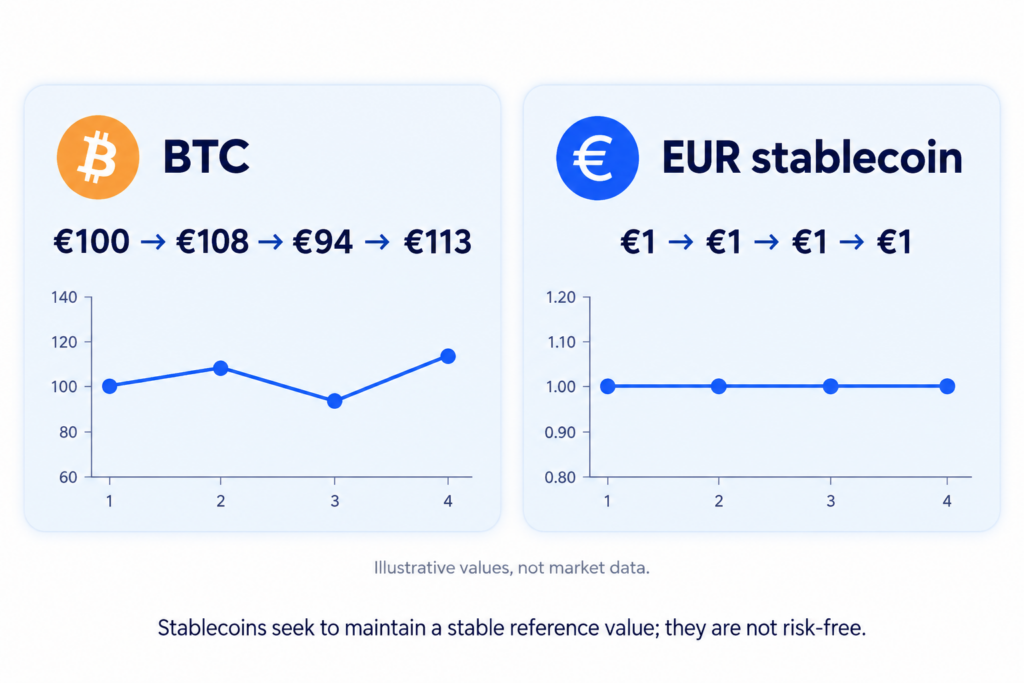
BTC
€100 → €108 → €94 → €113
versus
EUR stablecoin
€1 → €1 → €1 → €1
Stablecoins seek to maintain a stable reference value; they are not risk-free.
Then came stablecoins.
Blockchain money with a familiar value.
Fiat-referenced stablecoins are designed to track traditional currencies.
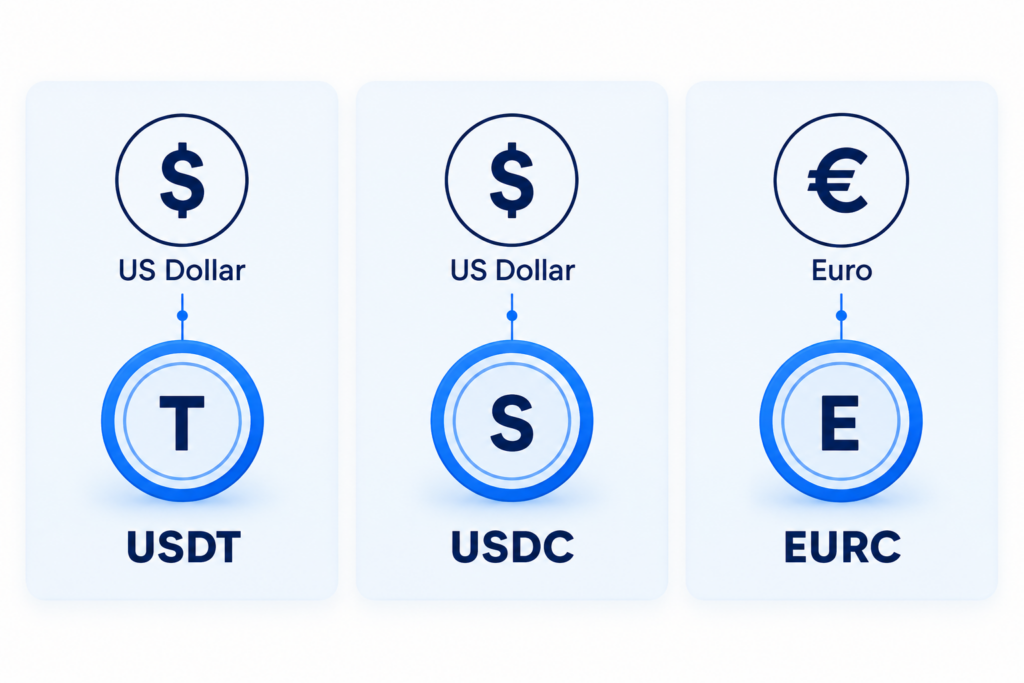
USDT
US Dollar
USDC
US Dollar
EURC
Euro
This changed what blockchain-based money could be used for.
Instead of asking:
What will this crypto asset be worth tomorrow?
a payment can be denominated in a familiar monetary value.
Stablecoins began making blockchain assets behave more like everyday money.
Stablecoins became a payment rail.
Stablecoins do not always need to be visible to the sender or recipient.
They can also operate as infrastructure between traditional currencies.
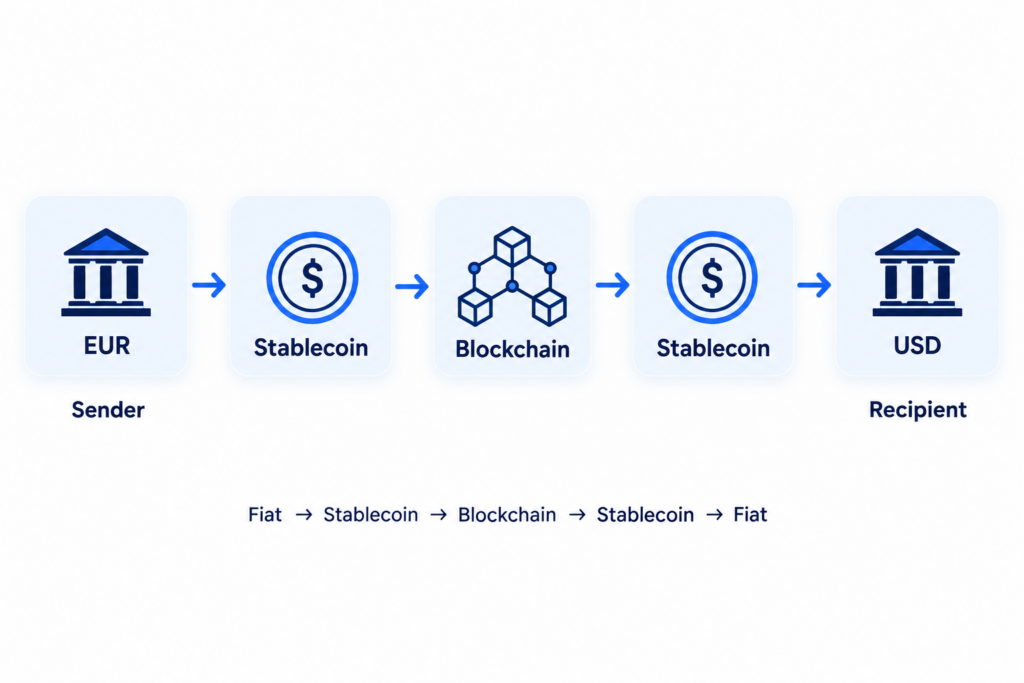
EUR → Stablecoin → Blockchain → Stablecoin → USD
The sender can start with traditional money.
The recipient can receive traditional money.
The stablecoin can provide the digital settlement layer between them.
This model has attracted growing interest for cross-border payments, remittances, treasury and global payouts.
But why convert back?
What happens when stablecoins become money people actually use?
Pay with stablecoins.
Create. Scan. Pay. Received.
1. Create
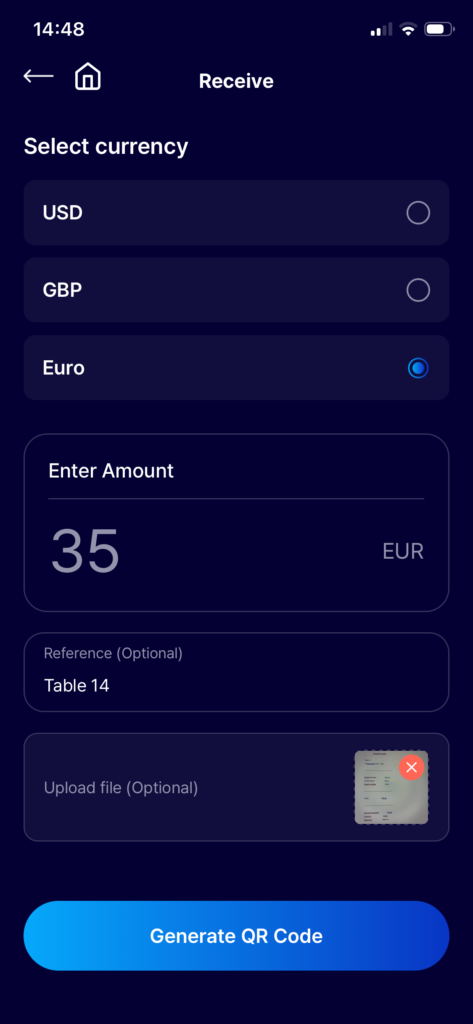
Merchant enters the amount, currency, reference and can attach the receipt.
€35 · Table 14
2. Present
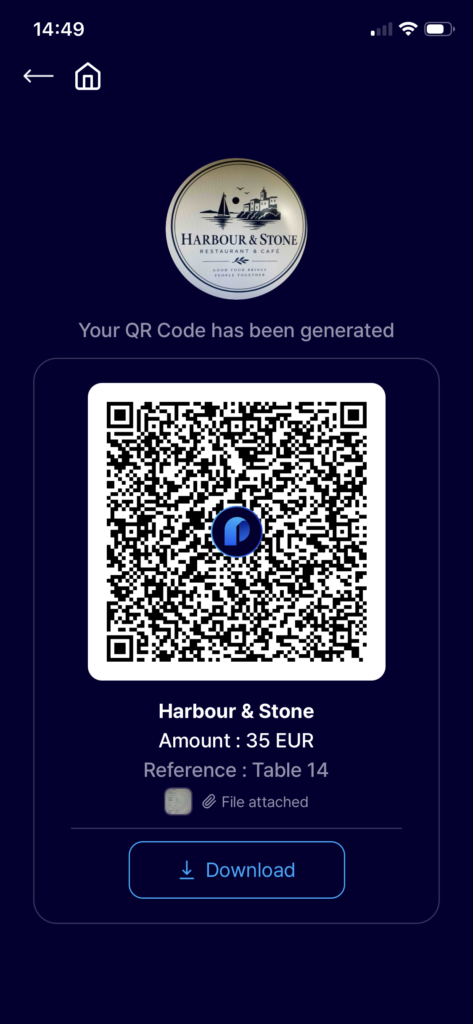
A QR payment request is generated.
No blockchain address needs to be entered manually.
3. Review
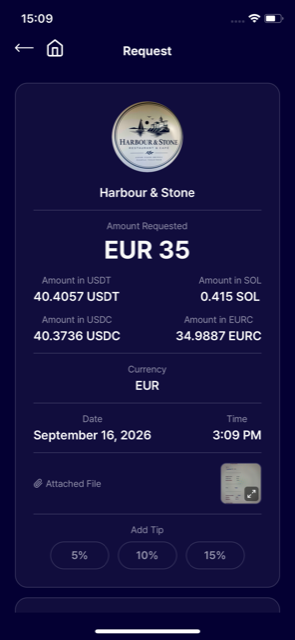
The customer scans the QR code and sees the requested amount, supported digital assets and receipt — and can add a tip.
4. Received
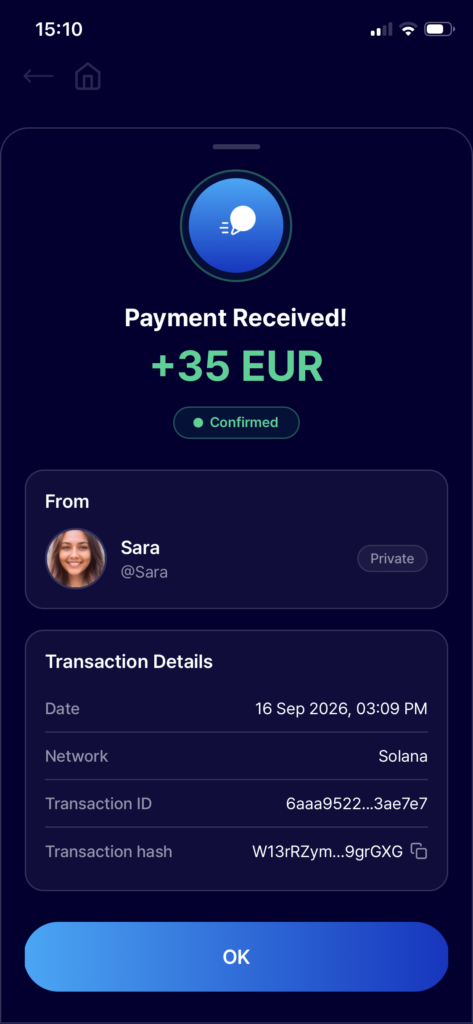
The merchant receives confirmation together with the blockchain transaction details.
From payment request to confirmed blockchain transaction — without a traditional card payment flow.
Payment approved isn’t the same as payment received.
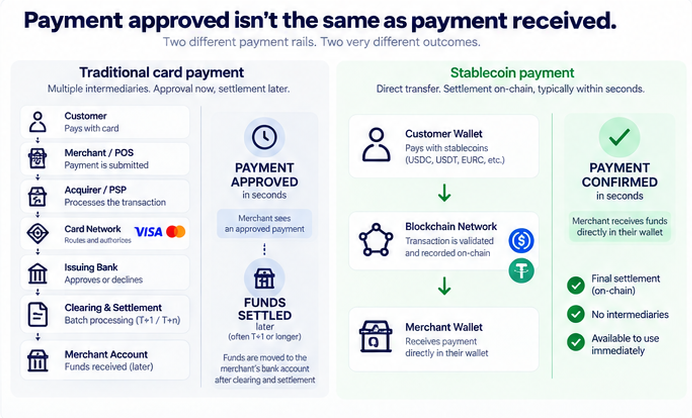
A card payment can be approved within seconds while clearing, settlement and merchant funding follow through the card-payment infrastructure.
A direct stablecoin payment works differently. The digital asset itself is transferred on-chain to the recipient.
Traditional card payment
Approved now. Settlement later.
Direct stablecoin payment
Transferred and settled on-chain.
Blockchain settlement speed and finality vary by network and implementation.
But where do the stablecoins come from?
For years, this was one of the biggest barriers.
Users commonly needed to:
Bank → Exchange → Buy Crypto → Transfer to Wallet
Cryptocurrency exchanges helped create the bridge between traditional currencies and digital assets.
Today, that bridge can be integrated directly into an application.
Add money.
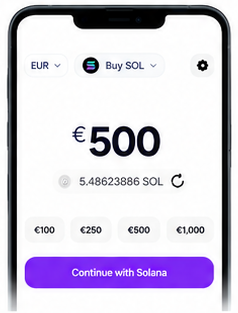
A fiat on-ramp allows traditional money to be converted into a digital asset without requiring the user to separately manage the entire exchange process.
€500 → Card / Bank → Conversion → Digital Asset
The technology underneath can become almost invisible to the user.
Stablecoins meet the card.
Spend beyond the stablecoin world.
Direct stablecoin payments require compatible payment infrastructure.
A stablecoin-linked card solves a different problem: connecting digital assets with the existing card ecosystem.

Stablecoin Wallet
→ Payment Card
→ Shop · Restaurant · Online · Travel
The merchant does not need a stablecoin wallet.
The merchant does not need to understand blockchain.
Existing card infrastructure handles the merchant side of the transaction.
And then came the bank account.
This changes the model again.
The next step is connecting stablecoin environments directly with traditional account details and payment networks.
Depending on provider and geography, these can include:
EUR
IBAN · SEPA · SEPA Instant
GBP
UK account details · Faster Payments
USD
US account details · ACH
Get paid from the banking world.
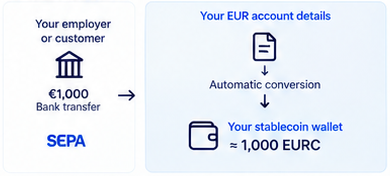
Employer / Customer → €1,000 Bank Transfer → SEPA → EUR Account Details → Conversion → Stablecoin Wallet
The sender can make an ordinary bank transfer.
The receiving environment can convert the value into stablecoins.
The sender doesn’t need a crypto wallet.
And send money back.
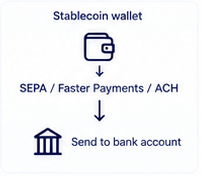
Stablecoin Wallet → Conversion → SEPA · Faster Payments · ACH → Recipient Bank Account
A landlord, supplier, employee or friend does not necessarily need to accept stablecoins.
The recipient can receive conventional currency through the appropriate payment network.
Blockchain money can interact with the banking world in both directions.
What does this look like to the user?
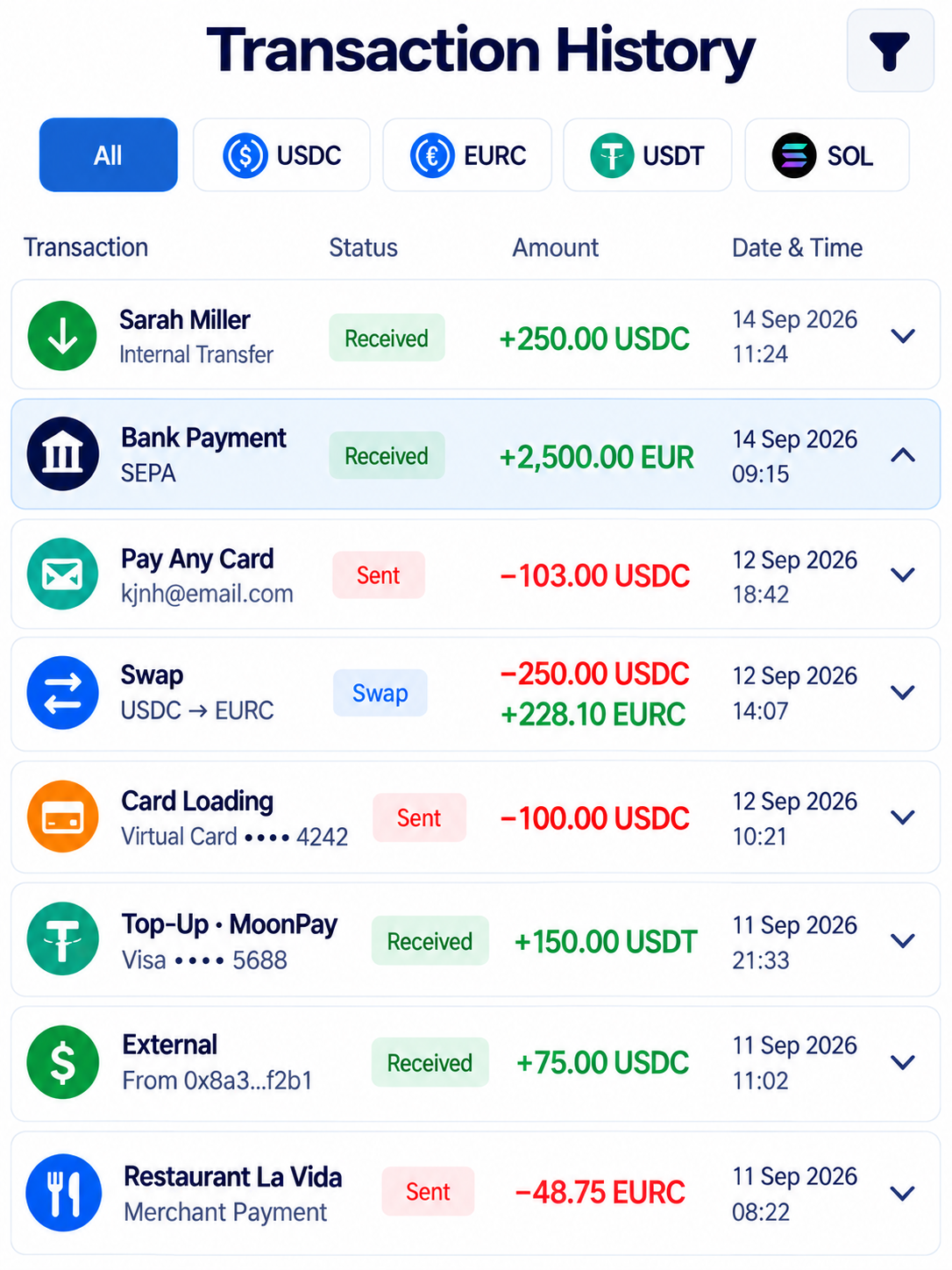
Stablecoin received
Bank payment
Card payment
Swap
Card loading
On-ramp
Merchant payment
Traditional banking and blockchain activity no longer need to live in completely separate applications.
A single financial environment can potentially bring together:
Receive · Hold · Convert · Pay · Spend · Send
across both fiat and stablecoin infrastructure.
Money without the geographical boundaries of a single payment rail.

Stablecoins can move across blockchain networks continuously and globally.
Traditional payment rails can provide the local entry and exit points.
Together, they can create financial infrastructure that combines global blockchain settlement with local money movement.
GLOBAL BLOCKCHAIN
↕
LOCAL PAYMENT RAILS
SEPA · Faster Payments · ACH · other domestic networks
Stablecoins. Payments. Settlement. Cards. Bank accounts. Local payment rails.
Put everything together.
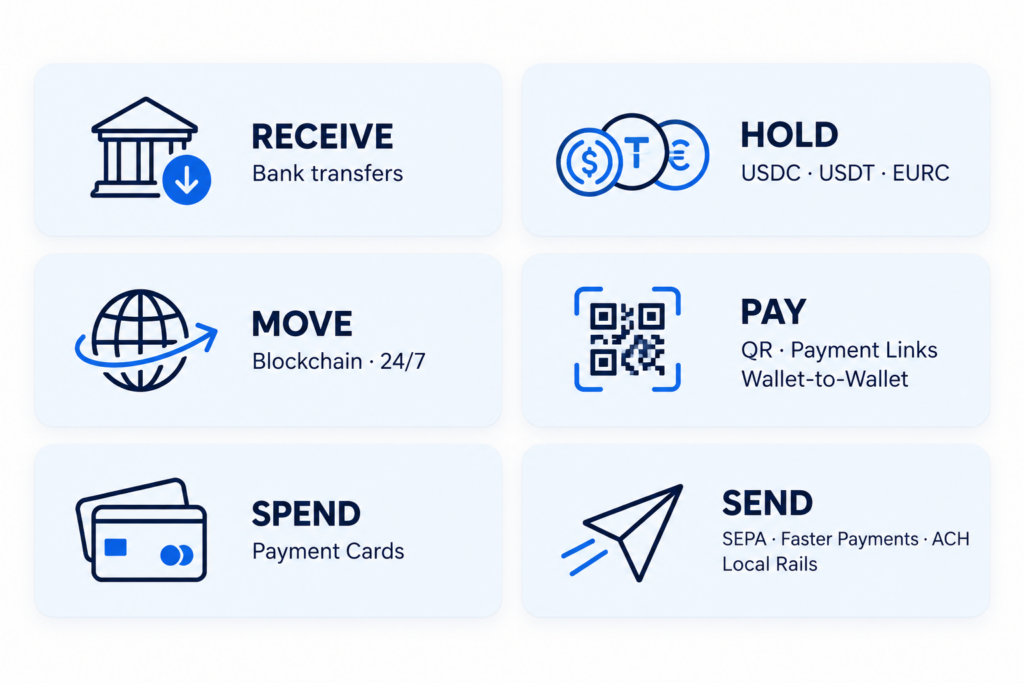
What is Stablecoin Banking?
Stablecoin Banking connects stablecoins and blockchain-based payments with the financial infrastructure people and businesses already use.
It brings together the ability to receive traditional money, hold and transfer stablecoins, make blockchain payments, use payment cards and send value back through conventional payment networks.
Stablecoin Banking is not a regulatory classification and does not necessarily mean that the provider of such services is legally a bank.
Rather, it describes an emerging financial model connecting two previously separate environments.
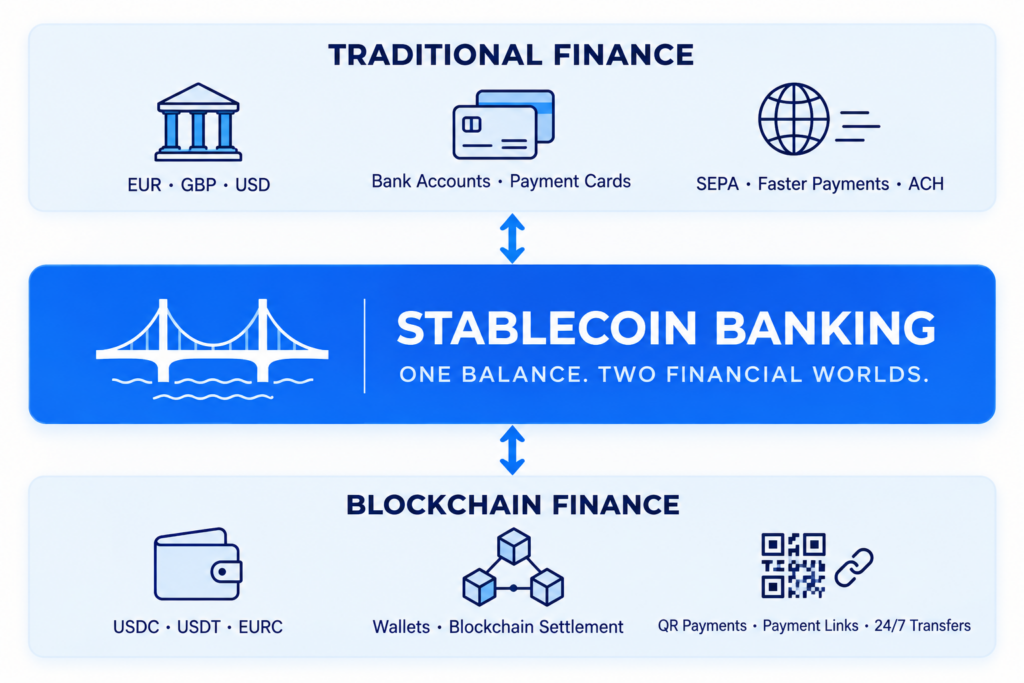
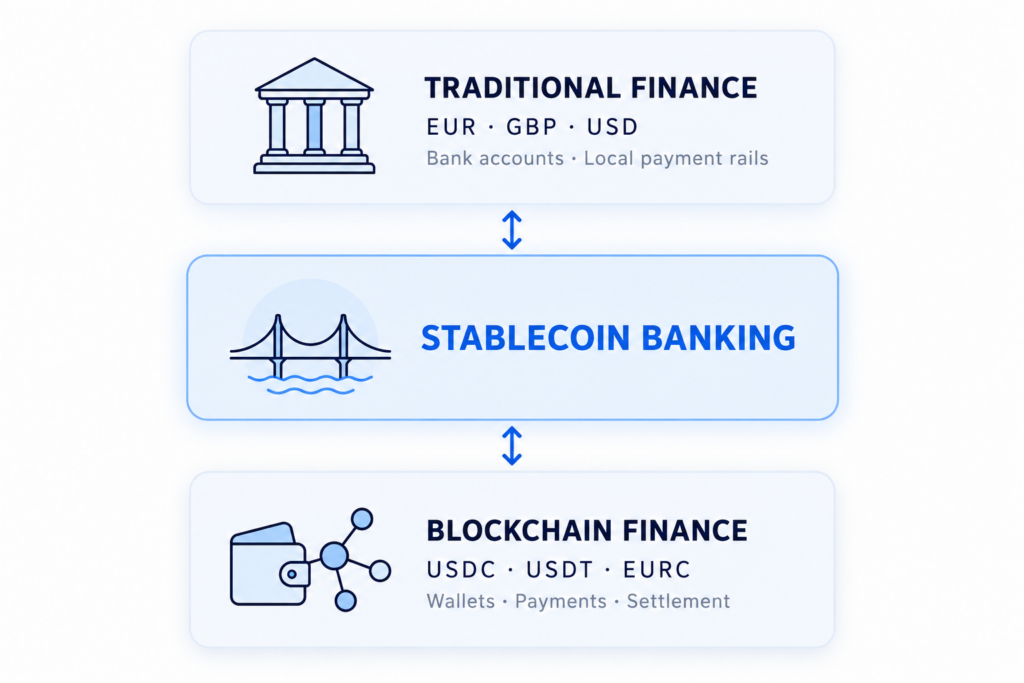
TRADITIONAL FINANCE
EUR · GBP · USD
Bank Accounts
SEPA · Faster Payments · ACH
Payment Cards
↕️
STABLECOIN BANKING
ONE BALANCE. TWO FINANCIAL WORLDS.
↕️
BLOCKCHAIN FINANCE
USDC · USDT · EURC
Wallets
Blockchain Settlement
QR Payments
Payment Links
24/7 Transfers
Learn about Stablecoin Banking
Stablecoins Explained
What stablecoins are and why they exist.
USDT vs USDC vs EURC
Currencies, issuers, reserves and differences.
How Stablecoins Are Backed
Understanding reserves and redemption.
Stablecoins vs Electronic Money
Where the concepts overlap — and where they differ.
Card vs Stablecoin Settlement
Authorization, clearing, settlement and blockchain finality.
On-Ramps & Off-Ramps
How fiat moves into and out of blockchain environments.
Stablecoin Cards
Connecting digital assets with card networks.
Virtual Accounts & Stablecoins
Connecting bank transfers with stablecoin wallets.
Custodial vs Non-Custodial Wallets
Stablecoin Regulation
Further reading
Stablecoin Banking sits at the intersection of payments, banking, blockchain and regulation.
Explore research and information from organizations including:
Federal Reserve · ECB · BIS · European Union · Visa · Mastercard · Circle · Tether
Stablecoin Banking in practice
Stablecoin Banking is moving from infrastructure to real-world financial applications.
Platforms are beginning to combine wallets, blockchain payments, cards and traditional payment rails into integrated user experiences.
Peymo Ltd has developed an app for Stablecoin Banking, bringing together wallets, blockchain payments, payment cards and traditional payment rails in one user experience.